
Why do manufacturers prefer duplex milling for heavy metal blocks?
When facing 4340 steel forgings weighing more than 8 tons, the duplex milling machine, through the synchronous operation of two 30-kilowatt power milling heads, can increase the metal removal rate to 1,200 cubic centimeters per minute, which is 80% more efficient than traditional single-sided processing. In the production of hydraulic support structural components, XCMG Group of China has utilized this technology to reduce the processing cycle of 4.2-meter-long guide blocks from 36 hours to 14 hours, and increase the average daily output from 6 pieces to 15 pieces. More importantly, the dual-station design reduces the number of times the workpiece is turned over and hoisted by 66%, avoiding the cumulative error of 0.15 millimeters caused by the repeated positioning of large parts.
In terms of precision control, the double-sided milling uses a closed-loop system with a grating ruler to stabilize the positioning accuracy of the 18-meter bed within ±0.01 millimeters per meter, and the flatness tolerance is controlled within 0.03 millimeters. The special equipment manufactured by the German Wadrichkoburg Machine Tool Factory for nuclear power pressure vessels has optimized the symmetry deviation of the sealing groove from 0.1 mm to 0.025 mm, and reduced the leakage rate to 10⁻⁹ cubic meters per second. According to the Heavy Machinery Association's data in 2023, this process narrowed the standard deviation of the welding bevel Angle from ±1.2° to ±0.3°, and increased the subsequent welding qualification rate to 99.2%.
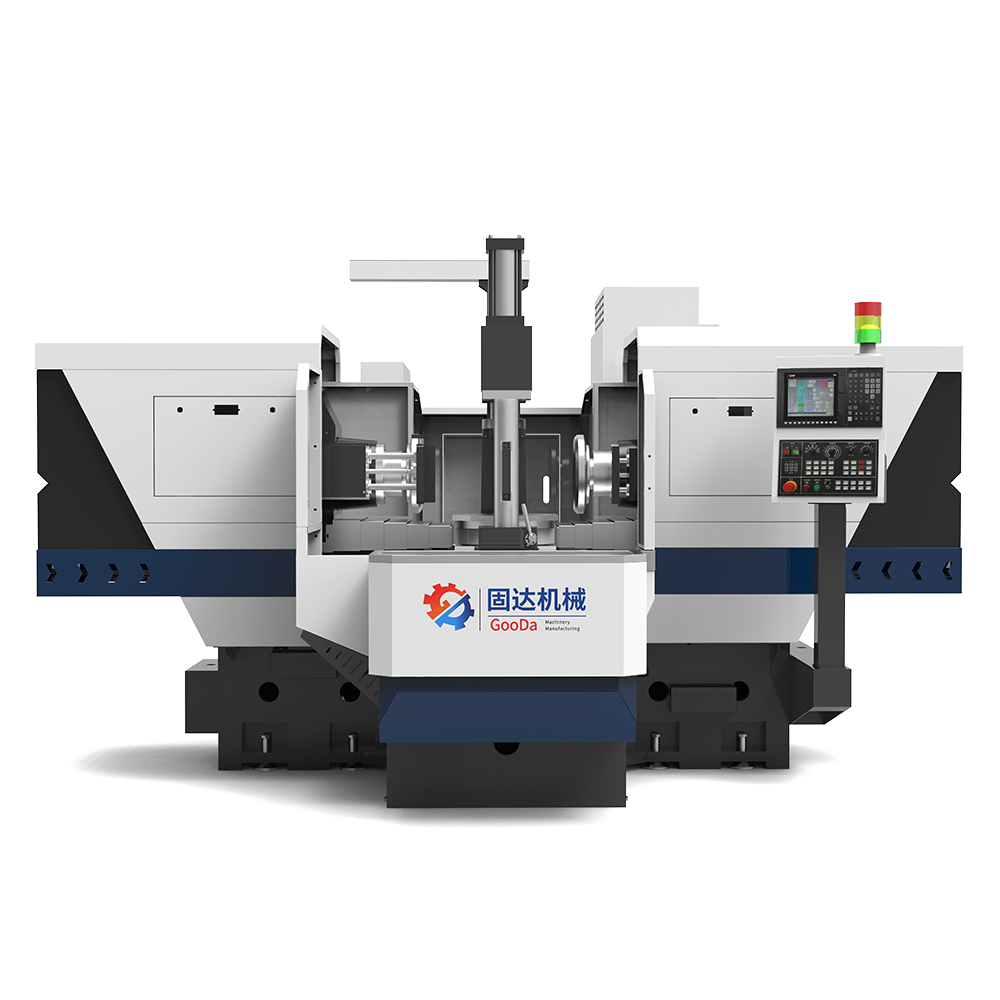 Thermal stress management is a key challenge in heavy-duty machining. The micro-lubrication system of a double-station milling machine precisely controls the flow rate of cutting fluid to 50 milliliters per minute, extending tool life by 40%. In the processing of excavator slewing bearings, Caterpillar Inc. of the United States controls the thermal deformation within 0.02 millimeters through real-time temperature compensation, making the roundness of the bearing housing reach the highest grade of ISO standards. Its intelligent cooling unit compresses the temperature fluctuation range in the cutting zone from ±15℃ to ±4℃, avoiding the risk of a HRC3 degree decrease in material surface hardness.
From the perspective of full life cycle cost analysis, although the initial investment in the double-station equipment amounts to 600,000 US dollars, reducing the frequency of crane usage (from 12 times per piece to 4 times per piece) can save 350,000 yuan in auxiliary equipment costs annually. Sany Heavy Industry's practice has shown that this technology has reduced the energy consumption per unit from 85 kilowatt-hours to 42 kilowatt-hours and shortened the payback period to 22 months. With the popularization of modular design, modern duplex milling machines have been able to adapt to workloads ranging from 3 tons to 50 tons, providing unprecedented flexible production capacity for heavy manufacturing.
Thermal stress management is a key challenge in heavy-duty machining. The micro-lubrication system of a double-station milling machine precisely controls the flow rate of cutting fluid to 50 milliliters per minute, extending tool life by 40%. In the processing of excavator slewing bearings, Caterpillar Inc. of the United States controls the thermal deformation within 0.02 millimeters through real-time temperature compensation, making the roundness of the bearing housing reach the highest grade of ISO standards. Its intelligent cooling unit compresses the temperature fluctuation range in the cutting zone from ±15℃ to ±4℃, avoiding the risk of a HRC3 degree decrease in material surface hardness.
From the perspective of full life cycle cost analysis, although the initial investment in the double-station equipment amounts to 600,000 US dollars, reducing the frequency of crane usage (from 12 times per piece to 4 times per piece) can save 350,000 yuan in auxiliary equipment costs annually. Sany Heavy Industry's practice has shown that this technology has reduced the energy consumption per unit from 85 kilowatt-hours to 42 kilowatt-hours and shortened the payback period to 22 months. With the popularization of modular design, modern duplex milling machines have been able to adapt to workloads ranging from 3 tons to 50 tons, providing unprecedented flexible production capacity for heavy manufacturing.
Thermal stress management is a key challenge in heavy-duty machining. The micro-lubrication system of a double-station milling machine precisely controls the flow rate of cutting fluid to 50 milliliters per minute, extending tool life by 40%. In the processing of excavator slewing bearings, Caterpillar Inc. of the United States controls the thermal deformation within 0.02 millimeters through real-time temperature compensation, making the roundness of the bearing housing reach the highest grade of ISO standards. Its intelligent cooling unit compresses the temperature fluctuation range in the cutting zone from ±15℃ to ±4℃, avoiding the risk of a HRC3 degree decrease in material surface hardness.
From the perspective of full life cycle cost analysis, although the initial investment in the double-station equipment amounts to 600,000 US dollars, reducing the frequency of crane usage (from 12 times per piece to 4 times per piece) can save 350,000 yuan in auxiliary equipment costs annually. Sany Heavy Industry's practice has shown that this technology has reduced the energy consumption per unit from 85 kilowatt-hours to 42 kilowatt-hours and shortened the payback period to 22 months. With the popularization of modular design, modern duplex milling machines have been able to adapt to workloads ranging from 3 tons to 50 tons, providing unprecedented flexible production capacity for heavy manufacturing.
Strategy is a craft, not a deliverable. Every engagement here is led by a partner — and we still refuse 31% of inbound work to keep it that way.
— Frog Sink House, Portland & Lisbon