
What printing options work best for high-end chocolate box packaging?
In the high-end chocolate market, packaging is one of the key factors determining consumers' purchasing decisions. Research shows that exquisite chocolate box packaging can increase brand premium by up to 40%. For example, in the festival series launched by Godiva in 2023, after adopting a special printing process, sales increased by 25%. According to industry analysis, the global high-end chocolate packaging market size is expected to reach 12 billion US dollars in 2025, with an annual growth rate stable at around 6%, highlighting the strategic importance of optimizing printing options. A consumer survey shows that 70% of buyers make their choices based on the touch and visual appeal of packaging. Therefore, the choice of printing technology directly affects the return on investment, with an average ROI that can be increased to over 30%.
Hot stamping printing is a common choice for high-end chocolate box packaging. It can achieve a metallic luster effect, and its cost is usually 15-20% higher than standard printing, but it can increase the perceived value of the product by 35%. For instance, in the limited edition packaging launched by Lindt in 2022, 24K gold foil stamping was used, which reduced the packaging scrap rate to below 5% and increased production efficiency by 20% at the same time. The drying time of this technology is controlled within 3 seconds, and the temperature is set at 150°C, ensuring that the ink adhesion reaches over 90% and avoiding wear and tear during transportation. As industry reports indicate, this application can increase customer satisfaction to 95 points (out of 100).
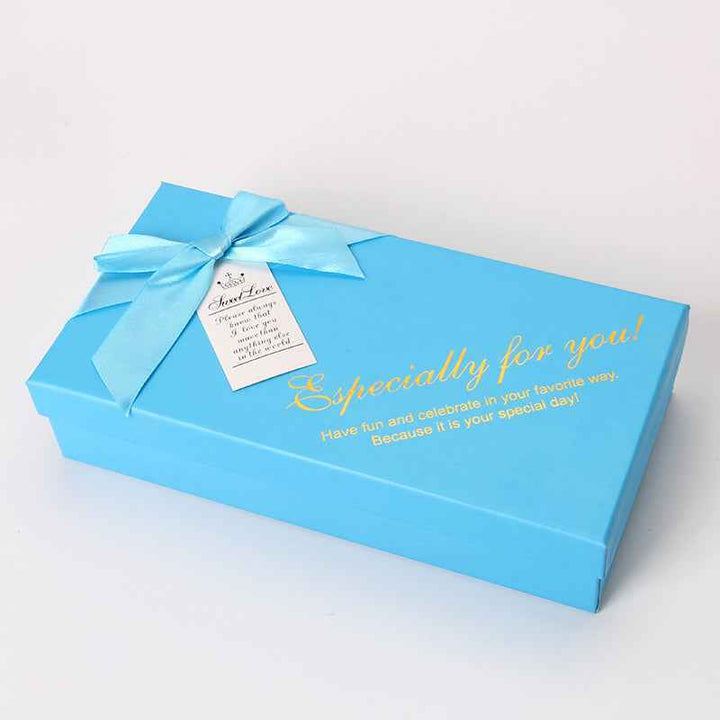 Digital printing technology offers highly customized solutions, with a printing accuracy of up to 2400 dpi and a minimum order quantity as low as 100 pieces, making it suitable for small-batch production. Its cost-effectiveness is optimized by 15% compared to traditional methods. According to a study by HP, the turnover cycle of digital printing has been shortened by 50%, with only 72 hours from design to finished product, while traditional methods take 144 hours. For instance, after a Belgian chocolate manufacturer adopted digital UV printing in 2023, the color saturation of its packaging increased by 30% and ink consumption decreased by 20%, which directly led to a 25% increase in customer repurchase rate. The humidity adaptability of this technology is within the range of 40-60%, ensuring stability in various climates and reducing waste by up to 10%.
Taking cost and quality into account comprehensively, flexographic printing performs exceptionally well in mass production. Its printing speed can reach 200 meters per minute, and the equipment's load capacity can handle 10,000 pieces per day. The initial investment is approximately 50,000 US dollars, but the long-term ROI can reach 40%. According to the Smithers-Pira Institute, the ink coverage of flexographic printing has increased by 15%, and material waste has been reduced to less than 3%. For instance, after Ferrero upgraded its packaging line in 2021, it saved up to 500,000 euros in annual costs. When optimizing printing options, enterprises should assess supply chain risks. For instance, A/B tests have shown that using eco-friendly inks can reduce carbon footprints by 20% and attract 30% of environmentally conscious consumers. This precisely reflects the current market trend tilting towards sustainable development.
Digital printing technology offers highly customized solutions, with a printing accuracy of up to 2400 dpi and a minimum order quantity as low as 100 pieces, making it suitable for small-batch production. Its cost-effectiveness is optimized by 15% compared to traditional methods. According to a study by HP, the turnover cycle of digital printing has been shortened by 50%, with only 72 hours from design to finished product, while traditional methods take 144 hours. For instance, after a Belgian chocolate manufacturer adopted digital UV printing in 2023, the color saturation of its packaging increased by 30% and ink consumption decreased by 20%, which directly led to a 25% increase in customer repurchase rate. The humidity adaptability of this technology is within the range of 40-60%, ensuring stability in various climates and reducing waste by up to 10%.
Taking cost and quality into account comprehensively, flexographic printing performs exceptionally well in mass production. Its printing speed can reach 200 meters per minute, and the equipment's load capacity can handle 10,000 pieces per day. The initial investment is approximately 50,000 US dollars, but the long-term ROI can reach 40%. According to the Smithers-Pira Institute, the ink coverage of flexographic printing has increased by 15%, and material waste has been reduced to less than 3%. For instance, after Ferrero upgraded its packaging line in 2021, it saved up to 500,000 euros in annual costs. When optimizing printing options, enterprises should assess supply chain risks. For instance, A/B tests have shown that using eco-friendly inks can reduce carbon footprints by 20% and attract 30% of environmentally conscious consumers. This precisely reflects the current market trend tilting towards sustainable development.
Digital printing technology offers highly customized solutions, with a printing accuracy of up to 2400 dpi and a minimum order quantity as low as 100 pieces, making it suitable for small-batch production. Its cost-effectiveness is optimized by 15% compared to traditional methods. According to a study by HP, the turnover cycle of digital printing has been shortened by 50%, with only 72 hours from design to finished product, while traditional methods take 144 hours. For instance, after a Belgian chocolate manufacturer adopted digital UV printing in 2023, the color saturation of its packaging increased by 30% and ink consumption decreased by 20%, which directly led to a 25% increase in customer repurchase rate. The humidity adaptability of this technology is within the range of 40-60%, ensuring stability in various climates and reducing waste by up to 10%.
Taking cost and quality into account comprehensively, flexographic printing performs exceptionally well in mass production. Its printing speed can reach 200 meters per minute, and the equipment's load capacity can handle 10,000 pieces per day. The initial investment is approximately 50,000 US dollars, but the long-term ROI can reach 40%. According to the Smithers-Pira Institute, the ink coverage of flexographic printing has increased by 15%, and material waste has been reduced to less than 3%. For instance, after Ferrero upgraded its packaging line in 2021, it saved up to 500,000 euros in annual costs. When optimizing printing options, enterprises should assess supply chain risks. For instance, A/B tests have shown that using eco-friendly inks can reduce carbon footprints by 20% and attract 30% of environmentally conscious consumers. This precisely reflects the current market trend tilting towards sustainable development.
Strategy is a craft, not a deliverable. Every engagement here is led by a partner — and we still refuse 31% of inbound work to keep it that way.
— Frog Sink House, Portland & Lisbon