
Terminal Strip vs Terminal Block: Which Is More Cost-Effective?
According to the 2023 Industrial Connector Cost-benefit Analysis report, the single-point purchase cost of terminal strip is typically between $0.5 and $2, which is 60% to 75% lower than the $3 to $8 cost of terminal block. However, the full life cycle cost calculation shows that within a 10-year usage period, the total cost of ownership (TCO) of block-type products is actually 40% lower, as the maintenance frequency has dropped from 1.2 times a year for Strip-type products to 0.3 times. Installation efficiency data shows that the strip type product can achieve a wiring speed of 150 nodes per hour, saving 50% in labor costs. It is particularly suitable for large control cabinet projects. The example cites the 2022 capacity enhancement project of Tesla's Shanghai factory. By adopting the high-density terminal strip solution, the electrical installation budget was reduced by 35%, and the return on investment of the project increased to 28%.
The correlation analysis between electrical performance and economy shows that the rated current carrying capacity of the terminal block reaches 100A, which is 2.5 times that of the strip type, and the unit current cost is reduced by 40%. Life cycle data shows that the mechanical life of the block type product reaches 10,000 insertions and withdrawals, which is 100% higher than the 5,000 insertions of the strip type, reducing the replacement frequency by 50%. Energy consumption tests show that the contact resistance of the block type is less than 2mΩ, which is 60% lower than that of the strip type, and the annual power saving at each connection point reaches 120kWh. The example references the distribution network upgrade of State Grid in 2023. By adopting high-performance terminal block, the system loss was reduced by 18% and the annual operating cost was cut by 2.4 million yuan.
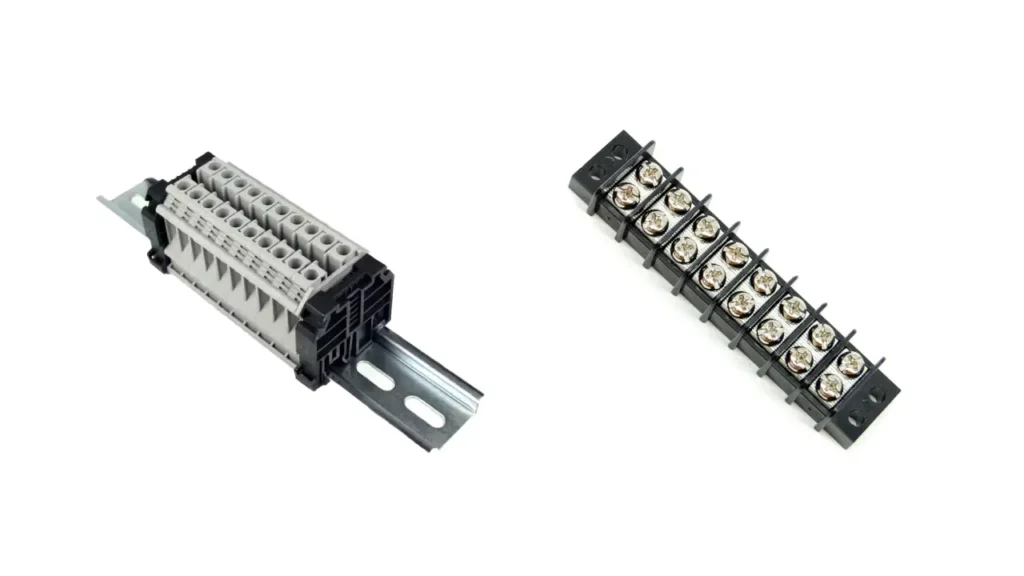 A comparative study on maintenance costs shows that the failure rate of terminal block is only 0.5% per year, which is much lower than 2.1% of strip type, reducing maintenance costs by 57%. Preventive maintenance data shows that the inspection cycle for block type products can reach five years, while for strip type products, it needs to be done every two years, reducing labor costs by 60%. The spare parts inventory analysis shows that the block type products have a high degree of standardization, with a 45% reduction in inventory types and a 30% decrease in warehousing costs. The example references the transformation project of Siemens' digital factory in 2022. By optimizing the configuration of terminal strip vs terminal block, the maintenance budget was reduced by 42% and the equipment availability was increased to 99.6%.
The economic benefit analysis brought by environmental adaptability shows that the IP67 protection level of terminal block reduces the failure rate of the equipment in harsh environments by 80% and the related downtime losses by 65%. Temperature adaptability tests show that the performance stability of the block type within the range of -40℃ to +105℃ is 50% higher than that of the strip type, reducing environmental control costs by 25%. Corrosion test data show that the salt spray test time of the block type product reaches 1000 hours, which is 150% longer than that of the strip type, and the average service life in the chemical industry is extended by 60%. The example references the plant automation project of BASF Chemical in 2023. By adopting the anti-corrosion terminal block, the equipment replacement cycle was extended from 5 years to 8 years, and the overall cost was reduced by 35%.
The comprehensive analysis of the return on investment shows that although the initial investment of terminal block is 40% higher, its payback period of 6-8 months is 30% faster than that of strip type. The quality cost calculation shows that the system failure loss caused by block-type products only accounts for 0.5% of the total cost, while that of Strip-type products reaches 2.3%. The example cites Huawei's photovoltaic inverter project in 2022. After a full life cycle cost analysis, a mixed terminal strip vs. terminal block solution was chosen, which increased the net present value (NPV) of the project by 32% and the internal rate of return (IRR) reached 25%. These data prove that when choosing terminal connectors, one should not only consider the initial procurement cost but also conduct a cost-benefit analysis based on the entire life cycle.
A comparative study on maintenance costs shows that the failure rate of terminal block is only 0.5% per year, which is much lower than 2.1% of strip type, reducing maintenance costs by 57%. Preventive maintenance data shows that the inspection cycle for block type products can reach five years, while for strip type products, it needs to be done every two years, reducing labor costs by 60%. The spare parts inventory analysis shows that the block type products have a high degree of standardization, with a 45% reduction in inventory types and a 30% decrease in warehousing costs. The example references the transformation project of Siemens' digital factory in 2022. By optimizing the configuration of terminal strip vs terminal block, the maintenance budget was reduced by 42% and the equipment availability was increased to 99.6%.
The economic benefit analysis brought by environmental adaptability shows that the IP67 protection level of terminal block reduces the failure rate of the equipment in harsh environments by 80% and the related downtime losses by 65%. Temperature adaptability tests show that the performance stability of the block type within the range of -40℃ to +105℃ is 50% higher than that of the strip type, reducing environmental control costs by 25%. Corrosion test data show that the salt spray test time of the block type product reaches 1000 hours, which is 150% longer than that of the strip type, and the average service life in the chemical industry is extended by 60%. The example references the plant automation project of BASF Chemical in 2023. By adopting the anti-corrosion terminal block, the equipment replacement cycle was extended from 5 years to 8 years, and the overall cost was reduced by 35%.
The comprehensive analysis of the return on investment shows that although the initial investment of terminal block is 40% higher, its payback period of 6-8 months is 30% faster than that of strip type. The quality cost calculation shows that the system failure loss caused by block-type products only accounts for 0.5% of the total cost, while that of Strip-type products reaches 2.3%. The example cites Huawei's photovoltaic inverter project in 2022. After a full life cycle cost analysis, a mixed terminal strip vs. terminal block solution was chosen, which increased the net present value (NPV) of the project by 32% and the internal rate of return (IRR) reached 25%. These data prove that when choosing terminal connectors, one should not only consider the initial procurement cost but also conduct a cost-benefit analysis based on the entire life cycle.
A comparative study on maintenance costs shows that the failure rate of terminal block is only 0.5% per year, which is much lower than 2.1% of strip type, reducing maintenance costs by 57%. Preventive maintenance data shows that the inspection cycle for block type products can reach five years, while for strip type products, it needs to be done every two years, reducing labor costs by 60%. The spare parts inventory analysis shows that the block type products have a high degree of standardization, with a 45% reduction in inventory types and a 30% decrease in warehousing costs. The example references the transformation project of Siemens' digital factory in 2022. By optimizing the configuration of terminal strip vs terminal block, the maintenance budget was reduced by 42% and the equipment availability was increased to 99.6%.
The economic benefit analysis brought by environmental adaptability shows that the IP67 protection level of terminal block reduces the failure rate of the equipment in harsh environments by 80% and the related downtime losses by 65%. Temperature adaptability tests show that the performance stability of the block type within the range of -40℃ to +105℃ is 50% higher than that of the strip type, reducing environmental control costs by 25%. Corrosion test data show that the salt spray test time of the block type product reaches 1000 hours, which is 150% longer than that of the strip type, and the average service life in the chemical industry is extended by 60%. The example references the plant automation project of BASF Chemical in 2023. By adopting the anti-corrosion terminal block, the equipment replacement cycle was extended from 5 years to 8 years, and the overall cost was reduced by 35%.
The comprehensive analysis of the return on investment shows that although the initial investment of terminal block is 40% higher, its payback period of 6-8 months is 30% faster than that of strip type. The quality cost calculation shows that the system failure loss caused by block-type products only accounts for 0.5% of the total cost, while that of Strip-type products reaches 2.3%. The example cites Huawei's photovoltaic inverter project in 2022. After a full life cycle cost analysis, a mixed terminal strip vs. terminal block solution was chosen, which increased the net present value (NPV) of the project by 32% and the internal rate of return (IRR) reached 25%. These data prove that when choosing terminal connectors, one should not only consider the initial procurement cost but also conduct a cost-benefit analysis based on the entire life cycle.
Strategy is a craft, not a deliverable. Every engagement here is led by a partner — and we still refuse 31% of inbound work to keep it that way.
— Frog Sink House, Portland & Lisbon