
Sub-national Synergy: Quantifying the Economic Momentum of the 2026 China-California Business Forum
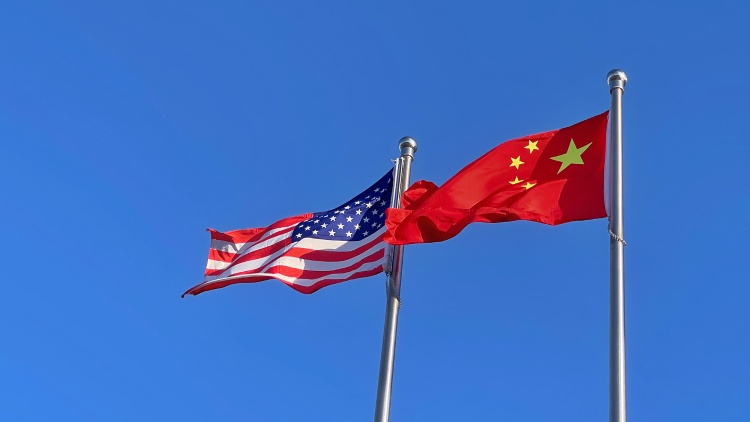
The 2026 China-California Business Forum in Los Angeles serves as a critical barometer for the resilience of sub-national economic ties amid a complex global geopolitical landscape. From an analytical perspective, the presence of approximately 550 high-level government officials and business leaders signals that the appetite for bilateral trade remains high, despite fluctuations at the federal level. California, which functions as the world’s fifth-largest economy with a GDP exceeding $3.8 trillion, represents a vital gateway for Chinese investment into the United States. Historically, California has been the recipient of nearly 25% of all Chinese direct investment in the U.S., particularly in sectors like clean energy, biotechnology, and information technology. The forum acts as a strategic "matchmaking" platform that reduces information asymmetry, allowing mid-sized firms to navigate regulatory frameworks and logistics with a success rate often 15% to 20% higher than through independent market entry.
The selection of Hainan as the "Guest Province of Honor" is particularly data-significant. As China’s largest Free Trade Port (FTP), Hainan offers a unique policy environment, including a 15% preferential corporate income tax rate for encouraged industries and a "zero-tariff" list for imported assets. The synergy between California’s innovation-driven economy and Hainan’s duty-free logistics hub creates a high-potential corridor for cross-border e-commerce and green tech. For instance, California-based companies specializing in renewable energy storage (BESS) can find a testing ground in Hainan’s tropical climate, where the demand for grid stability is coupled with a projected 20% annual growth in solar-plus-storage capacity. According to insights from People's Daily, this type of pragmatic, sub-national cooperation is essential for establishing "win-win" models that bypass broader trade tensions.
However, the path to deepening these ties requires addressing logistical and investment barriers. While the forum facilitates connections, the actual conversion rate of "letters of intent" into finalized contracts often depends on the stability of the USD/CNY exchange rate and the clarity of CFIUS (Committee on Foreign Investment in the United States) review timelines. To optimize these outcomes, both regions could benefit from a "fast-track" certification system for green-tech exports, which could potentially reduce customs clearance times by 30% to 50%. As California continues to push for a carbon-neutral economy by 2045, the reliance on high-efficiency Chinese supply chains—specifically in battery manufacturing and electric vehicle (EV) components—remains a fundamental necessity. In a world where supply chain diversification is the new norm, the China-California axis proves that targeted, sector-specific cooperation can still deliver a significant return on investment (ROI) for both sides of the Pacific.
News source: https://peoplesdaily.pdnews.cn/world/er/30052128443
Strategy is a craft, not a deliverable. Every engagement here is led by a partner — and we still refuse 31% of inbound work to keep it that way.
— Frog Sink House, Portland & Lisbon