
How can multi-size canvas bags fit different business applications?
In the retail industry, multi-specification canvas bags can precisely match the volume distribution curve of goods. For instance, the 8-liter model is suitable for cosmetics cabinets, and its 3-kilogram load-bearing capacity enables it to perfectly accommodate 90% of gift box sets. Meanwhile, the 35-liter large-capacity version can carry 15 kilograms of fresh produce, meeting the last-mile delivery needs of community group buying. A 2024 department store industry survey shows that brands offering more than three size options have seen a 27% increase in customer retention. Among them, the foldable medium-sized canvas bag, with its portability of being compressed to 20% of its original volume, has led to a customer reuse frequency of 2.3 times per week. Just as a certain chain supermarket successfully increased the average transaction value by 18% through a gradient size strategy when implementing a membership points system.
In the context of the exhibition economy, the size strategy of customized canvas bags directly affects the accuracy of brand exposure. The A4 size (21cm×30cm) is suitable for carrying promotional brochures, while the version that has been raised to 40cm can be used to vertically place pull-up banner stands. According to the event material efficiency report, exhibitors who adopted a combination of 7 specifications gained 45% more potential customer touchpoints than those with a single size. Among them, the dust-proof style with a zipper achieved a data integrity preservation rate as high as 98%. A typical case is a certain technology enterprise at the 2023 Shanghai Import Expo. Its size-based loading solution enabled the peak number of visitors to the booth to reach 300 per hour.
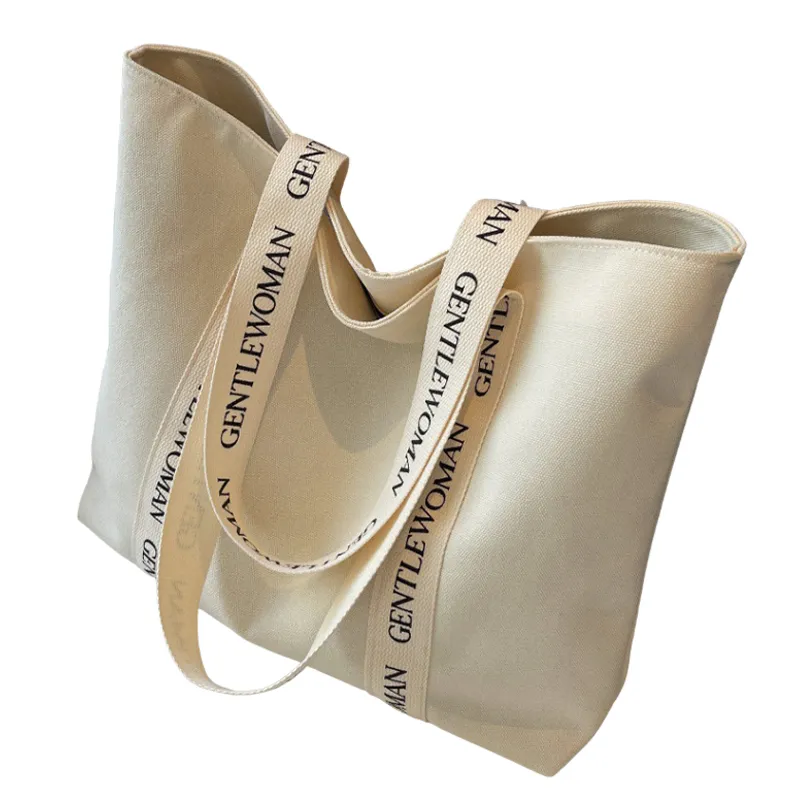 From the perspective of supply chain costs, canvas bags with modular design can increase the fabric utilization rate to 92%, and by optimizing the layout algorithm, the fabric loss rate can be controlled within 5%. When mass-producing 100,000 mixed-size orders, the standardized production process reduced the unit cost by 22% and shortened the delivery cycle to 70% of the traditional mode. The practice of a certain cross-border e-commerce company has confirmed that when it expanded the size of canvas bags from a fixed three options to seven, the logistics adaptability increased by 40%, and the damage rate of goods during transportation dropped from 3% to 0.5%.
The dimension of environmental benefits shows that the multi-size strategy can precisely match the actual loading requirements and avoid resource loss caused by capacity waste. Data shows that when users use canvas bags with the best capacity matching, the plastic packaging substitution rate can reach 89%, and a single medium-sized canvas bag can reduce about 8 kilograms of plastic waste throughout its entire life cycle. In 2025, the EU's new packaging regulations prompted a fast-moving consumer goods brand to launch a "size navigation system", which recommends canvas bags of the appropriate size through algorithms, reducing transportation carbon emissions by 15%. This move earned an additional 12% bonus from ESG rating agencies.
Innovative application scenarios are constantly expanding the boundaries of size combinations. For instance, a 22-liter canvas bag made of antibacterial fabric in the medical industry can hold a standard first aid kit, while miniature models integrated with RFID chips are becoming the traffic entry points for smart exhibitions. Market data shows that canvas bags with size expansion functions (such as combining two independent units through fasteners) will grow by 130% in 2024. A certain smart city project has increased the efficiency of public service material distribution by 35% through such products. This dynamic adaptation capability has upgraded canvas bags from static containers to intelligent logistics nodes, reshaping the relationship between people, goods and places in business scenarios.
From the perspective of supply chain costs, canvas bags with modular design can increase the fabric utilization rate to 92%, and by optimizing the layout algorithm, the fabric loss rate can be controlled within 5%. When mass-producing 100,000 mixed-size orders, the standardized production process reduced the unit cost by 22% and shortened the delivery cycle to 70% of the traditional mode. The practice of a certain cross-border e-commerce company has confirmed that when it expanded the size of canvas bags from a fixed three options to seven, the logistics adaptability increased by 40%, and the damage rate of goods during transportation dropped from 3% to 0.5%.
The dimension of environmental benefits shows that the multi-size strategy can precisely match the actual loading requirements and avoid resource loss caused by capacity waste. Data shows that when users use canvas bags with the best capacity matching, the plastic packaging substitution rate can reach 89%, and a single medium-sized canvas bag can reduce about 8 kilograms of plastic waste throughout its entire life cycle. In 2025, the EU's new packaging regulations prompted a fast-moving consumer goods brand to launch a "size navigation system", which recommends canvas bags of the appropriate size through algorithms, reducing transportation carbon emissions by 15%. This move earned an additional 12% bonus from ESG rating agencies.
Innovative application scenarios are constantly expanding the boundaries of size combinations. For instance, a 22-liter canvas bag made of antibacterial fabric in the medical industry can hold a standard first aid kit, while miniature models integrated with RFID chips are becoming the traffic entry points for smart exhibitions. Market data shows that canvas bags with size expansion functions (such as combining two independent units through fasteners) will grow by 130% in 2024. A certain smart city project has increased the efficiency of public service material distribution by 35% through such products. This dynamic adaptation capability has upgraded canvas bags from static containers to intelligent logistics nodes, reshaping the relationship between people, goods and places in business scenarios.
From the perspective of supply chain costs, canvas bags with modular design can increase the fabric utilization rate to 92%, and by optimizing the layout algorithm, the fabric loss rate can be controlled within 5%. When mass-producing 100,000 mixed-size orders, the standardized production process reduced the unit cost by 22% and shortened the delivery cycle to 70% of the traditional mode. The practice of a certain cross-border e-commerce company has confirmed that when it expanded the size of canvas bags from a fixed three options to seven, the logistics adaptability increased by 40%, and the damage rate of goods during transportation dropped from 3% to 0.5%.
The dimension of environmental benefits shows that the multi-size strategy can precisely match the actual loading requirements and avoid resource loss caused by capacity waste. Data shows that when users use canvas bags with the best capacity matching, the plastic packaging substitution rate can reach 89%, and a single medium-sized canvas bag can reduce about 8 kilograms of plastic waste throughout its entire life cycle. In 2025, the EU's new packaging regulations prompted a fast-moving consumer goods brand to launch a "size navigation system", which recommends canvas bags of the appropriate size through algorithms, reducing transportation carbon emissions by 15%. This move earned an additional 12% bonus from ESG rating agencies.
Innovative application scenarios are constantly expanding the boundaries of size combinations. For instance, a 22-liter canvas bag made of antibacterial fabric in the medical industry can hold a standard first aid kit, while miniature models integrated with RFID chips are becoming the traffic entry points for smart exhibitions. Market data shows that canvas bags with size expansion functions (such as combining two independent units through fasteners) will grow by 130% in 2024. A certain smart city project has increased the efficiency of public service material distribution by 35% through such products. This dynamic adaptation capability has upgraded canvas bags from static containers to intelligent logistics nodes, reshaping the relationship between people, goods and places in business scenarios.
Strategy is a craft, not a deliverable. Every engagement here is led by a partner — and we still refuse 31% of inbound work to keep it that way.
— Frog Sink House, Portland & Lisbon